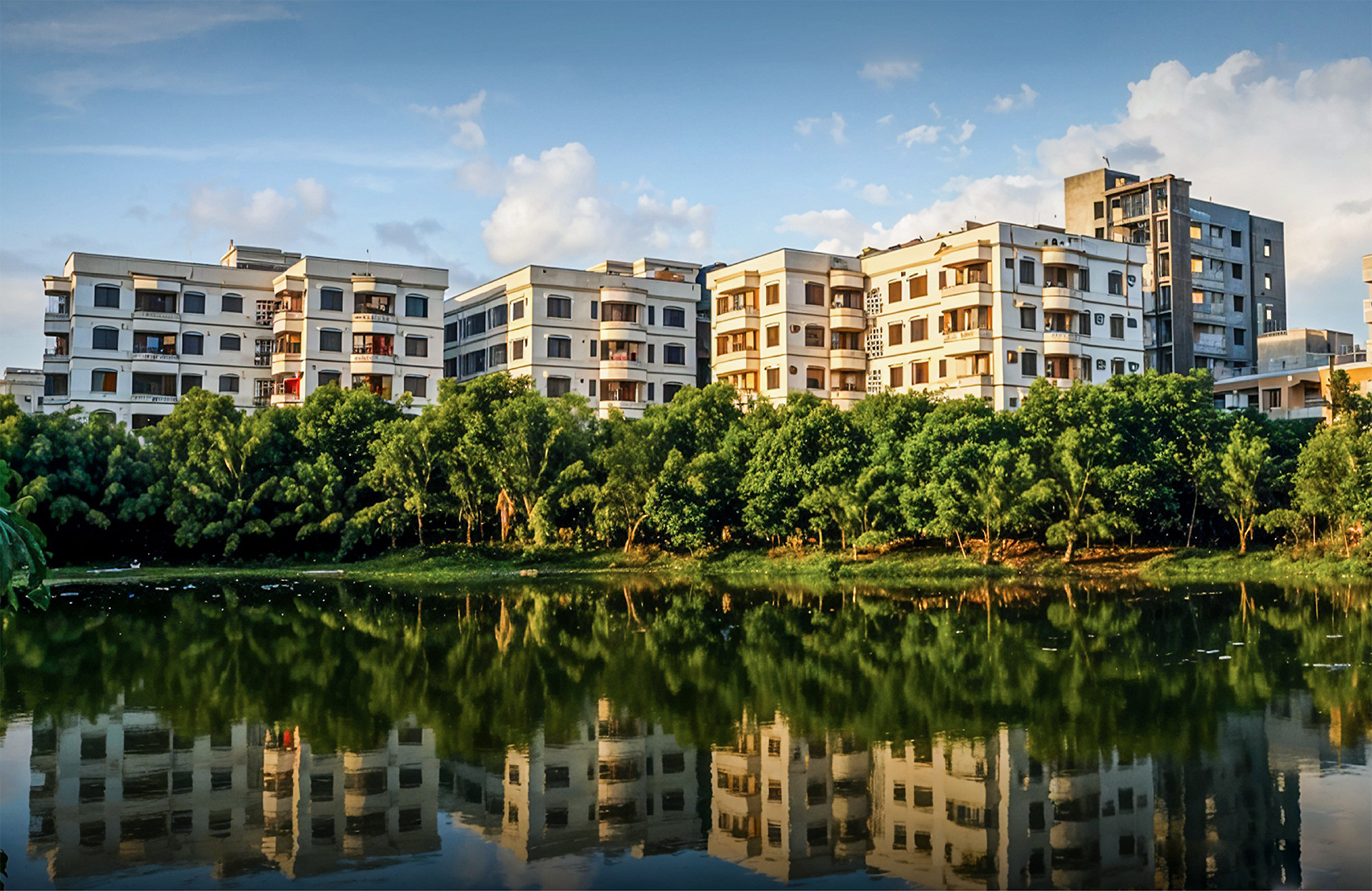
In the past, most real estate buyers in Bangladesh considered buying brand-new apartments as a safe investment, as well as buying units in under-construction projects. However, with buyers increasingly facing delays in handovers, rising costs of construction, and worsening affordability, investor behavior has dramatically altered. Nowadays, investing in used properties is valid and is being seen as a strategic choice and a smart financial decision. Used properties—often referred to as second-hand properties, resale flats, or secondary housing units—offer something that new projects cannot always guarantee: certainty. The customer inspects the property in person, assesses the area, gets to know the community, and begins to use or rent the property immediately after purchase.
This shift is particularly visible in Dhaka, where demand for resale flats in established neighborhoods has grown significantly. Market research indicates that secondary property transactions now make up a significant share of total residential sales, particularly for investors concentrating on real estate ROI in Bangladesh, as opposed to speculative value appreciation. This guide is designed to help you understand:
- How the secondary housing market in Bangladesh works
- Whether investing in used property fits your financial objectives
- Key benefits and risks of older homes
- Investment rules and calculations that people actively search for
- How to evaluate used property professionally
- Why structured resale platforms matter in today’s market
Understanding the Secondary Property Market in Bangladesh
What Is a Used or Secondary Property?
Used real estate properties are any real estate assets that have been all of the following:
- Transferred to at least one owner
- Constructed
- Occupied or retained after the initial sale
These include:
- Owner-occupied apartments sold later
- Rental properties changing ownership
- Completed flats purchased from individual sellers rather than developers
In Bangladesh, such assets are often referred to as “used flat,” “resale flat,” or “secondary property.”
Growth of the Secondary Housing Market
The secondary housing market in Bangladesh has grown steadily over the last decade, especially after 2020. Several factors contribute to this rise:
- Delayed completion of new projects
- Escalating construction material costs
- Buyers prioritizing immediate possession
- Increased demand from NRBs for ready units
Market Snapshot (Dhaka – Estimated)
| Indicator | Approximate Figure |
| Share of resale transactions in urban Dhaka | 35–40% |
| Annual growth of secondary property demand | 12–15% |
| Buyer preference for ready apartments | Increasing year-on-year |
This trend indicates that real estate investment is becoming mainstream rather than a niche.
Investing in Used Property vs New Property – A Practical Comparison
One of the questions buyers often ask is whether pre-owned homes are a better investment than newly built ones. It all depends on the objectives—but from a risk-adjusted perspective, properties that are used usually have better fundamentals.
Side-by-Side Comparison
| Criteria | Used Property | New Property |
| Purchase Price | Lower per sq ft | Higher |
| Possession | Immediate | 2–4 years |
| Location | Established areas | Developing zones |
| Rental Income | Immediate | Delayed |
| Delivery Risk | Low | High |
| Price Transparency | Higher | Lower |
For investors focused on cash flow and stability, used properties often outperform new launches.
Is Investing in Used Property a Good Idea?
Investing in a second home can be a smart decision when:
- Your primary housing costs are manageable
- Your income is stable and predictable
- The property is intended to generate rental income
- The purchase price follows income-based investment rules
In Bangladesh, second-hand property investment works particularly well when the property is:
- Located in a rental-demand area
- Purchased at or below the market average
- Free from legal and utility complications
When a Second Property May Be Risky
A second property may become a burden if:
- EMIs consume too much of your income
- Rental demand is weak
- Legal documentation is incomplete
That is why seasoned buyers are increasingly turning to verified listings, where documentation and pricing have been pre-validated, as is the case with structured resale marketplaces, such as Starpath Property Exchange
Benefits of Buying Used Properties (Why Investors Prefer Them)
Lower Entry Cost Improves ROI
One of the strongest advantages of investing in used property is price efficiency. Resale flats typically cost 15–30% less per square foot than new apartments in the same location. Lower entry cost directly improves:
- Net rental yield
- Break-even timeline
- Down payment flexibility
This is a key reason real estate ROI in Bangladesh tends to be more predictable with used properties.
Immediate Rental Yield for Second-Hand Homes
Unlike under-construction projects, used properties can generate rental income immediately.
Average Gross Rental Yield (Dhaka – Estimates)
| Area | Gross Yield Range |
| Mirpur | 5% – 6% |
| Uttara | 4.5% – 5.5% |
| Mohammadpur | 5% – 6% |
| Dhanmondi | 4% – 5% |
Immediate income significantly reduces investment risk.
Established Neighborhood Advantage
Used properties are usually located in:
- Fully developed areas
- Well-connected road networks
- Neighborhoods with schools, hospitals, and markets
This reduces uncertainty and vacancy risk compared to newly developed zones.
Negotiation Flexibility
Private sellers are often more flexible than developers. This allows:
- Price negotiation
- Payment structure customization
- Faster decision-making
Buyers using structured resale platforms—such as Starpath Property Exchange resale listings—often benefit from better transparency and smoother negotiations.
Risks of Investing in Older Homes (And How to Mitigate Them)
Maintenance and Renovation Costs
Older homes may require:
- Plumbing replacements
- Electrical system upgrades
- Lift and generator repairs
Mitigation Strategy:
Conduct a technical inspection and allocate a renovation buffer (typically 5–10% of purchase price).
Legal Due Diligence Risks
Legal complexity is one of the biggest risks in secondary property in Bangladesh. Common issues include:
- Incomplete title chain
- Mutation delays
- Pending utility dues
This is why buyers increasingly rely on document-verified resale platforms rather than informal brokers.
Limited Modern Amenities
Some older buildings may lack:
- Modern parking layouts
- Advanced security systems
- Smart home features
However, these limitations are often reflected in lower pricing, creating value opportunities.
Investment Rules Explained (High-Intent Queries Answered)
What Is the 10/3/5 Rule of Investment?
The 10/3/5 Rule of Investment suggests that your property price should be no more than 10 times your annual income, your down payment around 3 times, and your home loan limited to 5 times your annual income. This rule helps ensure affordable EMIs and protects you from over-borrowing.
- Property price ≤ 10× annual income
- Down payment ≈ 3× annual income
- Loan amount ≤ 5× annual income
This rule helps prevent over-leveraging.
How the 50/30/20 Rule Applies to Property Buyers
| Allocation | Purpose |
| 50% | Essentials (housing included) |
| 30% | Lifestyle |
| 20% | Savings & investments |
If your EMI pushes essentials beyond 50%, financial stress increases.
What Is the 2% Rule in Real Estate?
The 2% rule suggests monthly rent equals 2% of the property value. In Dhaka:
- Rarely achievable
- Practical benchmark: 0.4–0.6% monthly
Understanding the 25% Income Rule
The 25% Income Rule states that your total housing cost—including loan EMI, maintenance, and related expenses—should not exceed 25% of your gross monthly income, helping you maintain financial stability while investing in property.
Real Estate ROI in Bangladesh – How Used Properties Perform Over Time
When evaluating investing in used property, one of the most important questions investors ask is: “How much return can I realistically expect?” Unlike speculative land investments or under-construction projects, a used real estate investment delivers returns through two measurable components:
- Rental income (cash flow)
- Capital appreciation (long-term value growth)
Rental Yield for Second-Hand Homes in Bangladesh
Rental yield is a key reason many investors prefer resale properties.
Average Gross Rental Yield by Property Type
| Property Type | Gross Yield Range |
| Used apartments (Dhaka) | 4% – 6% |
| New apartments (initial years) | 2.5% – 4% |
| Commercial used units | 6% – 8% |
Used properties perform better because:
- Purchase prices are lower
- Rent is market-driven, not developer-influenced
- Immediate tenancy is possible
Capital Appreciation in Used Property
Contrary to a common misconception, older properties do appreciate, especially when:
- Located in established areas
- Land value rises faster than construction depreciation
- Surrounding infrastructure improves
Property Value Appreciation in Bangladesh (Urban Average)
| Location Type | Avg Annual Appreciation |
| Central Dhaka areas | 6% – 10% |
| Mid-density neighborhoods | 7% – 12% |
| Peripheral zones | 4% – 7% |
Source: REHAB, urban land valuation studies, market trend analysis
For investors, this means:
- Land value offsets building depreciation
- Long-term holding amplifies total return
Long-Term Wealth Comparison – Property vs Monthly Investment
What If You Invest BDT 10,000 Monthly for 20 Years?
Assuming:
- Monthly investment: BDT 10,000
- Annual return: 10%
- Investment period: 20 years
| Investment Type | Estimated Value |
| Monthly SIP-style investment | ~BDT 75–80 lakh |
| Used rental property (combined rent + appreciation) | Often higher, asset-backed |
Property adds:
- Physical asset ownership
- Rental income along the way
- Inflation hedge
This explains why real estate ROI in Bangladesh remains attractive despite market cycles.
Property Inspection Checklist – How to Evaluate a Used Property Properly
A professional inspection is essential when buying any pre-owned property. Skipping this step is one of the costliest mistakes buyers make.
Structural Inspection Checklist
- Visible wall cracks (hairline vs structural)
- Signs of water seepage or dampness
- Roof slab condition
- Column and beam integrity
Electrical System Inspection
- Load capacity suitability
- Wiring condition
- Circuit breaker functionality
- Backup power readiness
Plumbing and Drainage
- Water pressure consistency
- Old pipe leakage
- Drainage slope and blockage risks
Common Areas & Building Systems
- Lift condition and service history
- Generator capacity
- Fire safety arrangements
- Maintenance fund availability
Buyers who engage in structured resale transactions—such as those commonly found on verified resale platforms like Starpath Property Exchange—often gain access to inspection-ready properties with clearer disclosures.
Legal Due Diligence for Used Property in Bangladesh
Legal verification is the most critical step in secondary property investments in Bangladesh.
Essential Legal Documents Checklist
| Document | Why It Matters |
| Title Deed | Confirms ownership |
| Bia Deed / Sale Deed | Ownership transfer history |
| Mutation Certificate | Tax ownership |
| RAJUK Approval | Legal construction |
| Occupancy Certificate | Usage compliance |
| Utility Clearance | No dues |
Common Legal Risks in Resale Property
- Incomplete title chain
- Seller disputes among heirs
- Unpaid government dues
These risks underscore the importance of due diligence-focused resale platforms for buyers seeking transparency.
Financing Options for Used Property Buyers
Home Loans for Resale Flats in Bangladesh
Most banks in Bangladesh now finance used apartments, provided:
- The property is within approved age limits (often ≤20 years)
- Legal documents are verified
- Valuation meets bank criteria
Loan-to-value (LTV) ratio typically ranges:
- 50–70% depending on bank policy
EMI Planning for Used Property
Lower purchase price results in:
- Smaller loan requirement
- Lower EMI burden
- Better alignment with income-based rules (10/3/5 and 25% rules)
Pre-Owned Property Buying Tips for Smarter Investment Decisions
Buy Based on Yield, Not Emotion
- Calculate the expected rent first
- Compare against price
Focus on Micro-Location
Two buildings on the same road can have different:
- Access
- Noise levels
- Resale liquidity
Avoid Over-Renovation
Renovate for functionality, not luxury excess.
Prefer Transparent Resale Channels
Structured resale marketplaces reduce:
- Fraud risk
- Documentation uncertainty
- Pricing ambiguity
This is why buyers increasingly gravitate toward verified resale ecosystems, such as Starpath Property Exchange, without needing a separate “developer-style” commitment.
The Role of Secondary Property Platforms in Today’s Market
The secondary housing market has historically been fragmented, but this is changing.
Why Organized Resale Platforms Matter
They provide:
- Verified listings
- Document screening
- Market-based pricing insights
- Transaction guidance
This shift mirrors global trends, where second-hand real estate markets are becoming more professionalized as buyer awareness increases.
Bangladeshi Real Estate Trends Supporting Used Property Investment
Key trends shaping the future:
- Rising construction material costs
- Slower speculative buying
- Preference for ready assets
- Increasing regulatory scrutiny
All signs point toward sustained demand for used real estate investment.
Exit Strategy Planning – How and When to Sell a Used Property
One of the most overlooked aspects of investing in used property is having a clear exit strategy before purchase. Smart investors plan the end before the beginning.
Why Exit Strategy Matters in Used Property Investment
An exit strategy helps investors:
- Preserve capital
- Maximize appreciation
- Avoid distress selling
- Maintain liquidity
Properties that have been used often offer better resale flexibility because they have already been market-tested.
Common Exit Routes for Used Property Investors
1. Sell After Value Appreciation
Ideal when:
- Area infrastructure improves
- Demand outpaces supply
2. Sell After Renovation (Value-Add Strategy)
Minor improvements such as:
- Kitchen upgrades
- Bathroom modernization
- Repainting and lighting
can significantly increase resale value.
3. Long-Term Hold with Rental Income
Best for:
- Passive income seekers
- Inflation hedging
Resale flats in Dhaka tend to remain liquid due to consistent demand.
Who Should Invest in Used Property?
Not every investor profile is the same. Used property investment fits certain buyers particularly well.
Ideal Profiles for Used Property Investment
- Salaried professionals seeking stable rental income
- NRBs want ready and manageable assets
- Investors prefer lower risk over high speculation
- Buyers planning to upgrade later
Who Should Be Cautious?
- Buyers are heavily reliant on future appreciation
- Investors without legal diligence support
- Short-term flippers without renovation expertise
Understanding your risk profile is essential before entering secondary property Bangladesh investments.
Common Mistakes to Avoid in Used Property Investment
Ignoring Legal Verification
Verbal assurances are not substitutes for documents.
Overestimating Rental Demand
Always cross-check:
- Local rental listings
- Historical occupancy
Skipping Professional Inspection
Small issues compound into high costs.
Emotional Over-Buying
Investment property should be judged by numbers, not aesthetics.
Advanced Risk Mitigation Framework for Used Property Buyers
To protect capital and maximize ROI, experienced investors follow a structured decision framework.
The 4-Point Risk Check
- Legal Risk – Clear documentation
- Structural Risk – Inspection report
- Market Risk – Rental and resale demand
- Financial Risk – EMI affordability
This framework is commonly applied by professional buyers and structured resale platforms, where risk filtering happens before listings reach serious buyers.
Used Property vs Other Investment Options – A Final Comparison
| Investment Type | Risk Level | Liquidity | Income Generation |
| Used Property | Moderate | Medium | High |
| New Property | High | Low (early years) | Delayed |
| Stocks | High | High | Variable |
| Fixed Deposit | Low | High | Low |
Used property balances income, stability, and asset security, making it attractive for diversified portfolios.
Final Decision Matrix – Should You Invest in Used Property?
Answer YES if you:
- Want immediate rental income
- Prefer predictable returns
- Value transparency over hype
- Are you investing in a mature location
Answer NO if you:
- Expect fast speculative appreciation
- Are unwilling to conduct due diligence
- Depend on future price hype alone
Investing in used property is no longer merely an alternative option; it has become a strategic, data-backed, and increasingly preferred investment approach within Bangladesh’s evolving real estate market. With the advantages of immediate usability, lower entry costs, predictable rental yields, and strong long-term appreciation potential, used properties offer a balanced combination of income stability and capital growth. As the secondary housing market continues to mature, investors who apply financial discipline, thorough legal due diligence, and a clear understanding of local market dynamics are far more likely to outperform speculative buyers chasing short-term gains. In this changing landscape, structured resale ecosystems—such as Starpath Property Exchange, which prioritize verification, documentation transparency, and market-driven pricing—clearly reflect the future direction of Bangladesh’s real estate investment environment.
FAQ:
1. Is investing in used property safe in Bangladesh?
Ans: Yes, when legal due diligence, inspection, and location analysis are done properly. Most investment failures occur due to skipped verification, not property age.
2. Do used properties appreciate?
Ans: Yes. In established areas, land appreciation often outweighs building depreciation over time.
3. Can I get bank financing for a resale flat?
Ans: Most banks provide loans for used apartments that meet age, valuation, and legal criteria.
4. Is rental income higher from used properties?
Ans: Often yes, because purchase prices are lower while rents remain market-driven.
5. Are resale flats harder to sell later?
Ans: No. In mature locations, resale flats are often easier to sell than new projects due to immediate usability.